Connections – United we stand…

Connections build a united culture… (Connections Part 2)

hand-1030565_960_720Pixabay – Geralt

United we stand, divided we fall … the leadership choices that you make today shape the culture you live in tomorrow.

If you want to increase the effectiveness of your team and achieve goals you thought were out of reach, it begins by creating a culture in which people not only feel safe, they feel valued.

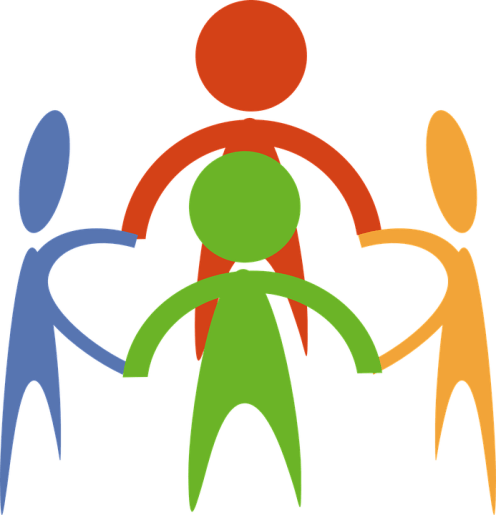
In “Leaders Eat Last,” Simon Sinek (2014) introduced us to the Circle of Safety.   Knowing that you are part of the circle of safety frees up people’s minds to focus on the team’s goals.  When a leader creates a culture where you “trust that the people to the left…[and] to the right of us have our backs, the better equipped we are to face the constant threats from outside together” (p. 22). Sinek wrote that you can feel it.  You can feel when you are surrounded by the circle of safety.  We feel valued and cared for by our colleagues and superiors.  We feel like we belong and our confidence grows along with our connections.  All of the group’s energy is directed towards the greater good (p. 24).
group-157841_960_720Pixabay OpenClipart-Vectors

When the circle begins to falter, we become suspicious of those around us and our brains go into survival mode. Our energy is redirected into watching for the dangers all around us instead of trusting our team (Leaders Eat Last, p. 22).  When trust goes down, speed goes down and costs go up (Speed of Trust, 2006, p. 13).  Trust, as Covey (2006) pointed out, is one of the most highly valued competencies of the new global economy (p. 21).

Daniel, Schwier and McCalla (2003) pointed out that “in almost every discussion of social capital, trust is treated as a central variable” (p. 6). While the development of social capital isn’t as simple as a direct cause and effect relationship with trust, Daniel et. al. noted that opportunities for positive social interactions do build trust.  Over time, increased trust is an integral part of growing social capital within a community (p. 6).
trust-1418901_960_720Pixabay – lcaroselli

In recent body language and confidence workshops and coaching sessions, Carla Gradin (2015-16) shared building connections is all about building on your know, like and trust factors.  As soon as you meet someone their brain automatically starts to process their first impression of you. Keep in mind first impressions happen in 2-3 seconds, likely before you’ve actually said anything (Gradin, 2015, p. 9). She reminded that our primitive brains immediately sort people into 4 categories:

  1. Friend
  2. Foe
  3. Sexual Partner
  4. Indifferent
    (page 8)

So if you want to build positive connections with people not only does what you say matter, how you say it has more impact than you think. Gradin reinforced Sinek’s 2009 TED Talk comment

“that people don’t buy what you do; they buy why you do it”
(minute 4:00).

In order to believe your why, people need to make a connection with you.  Gradin noted that people first notice your hands.  If I can’t see your hands or more specifically the palms of your hands, my primitive brain becomes quite concerned with what you are hiding and if you are a threat (p. 8).  Even palms facing down tells my brain that you could be hiding a weapon and I need to be on alert.  The story people’s body language tells is often more honest than what people actually say.

So how can you help build connections?

Touch, builds connection.  As Sinek (2014) explained in Leaders Eat Last, it’s all about the hormones.  Oxytocin in the right balance can enhance positive, trusting connections. Gradin (2015) explained that when we touch people, it has the potential to release oxytocin, “which can evoke the same feeling of connection equal to 3 hours of talk time” (p.10).  In Super Better, Jane McGonigal (2015) explained “touch and gratitude are two of the most effective” (p. 17) ways to increase your social resilience.  In particular, McGonigal noted that 6 seconds of holding hands or touching someone not only increased your oxytocin level but theirs as well.  The more oxytocin you release the more likely you are to help and protect that person which deepens your connection (p. 18).  Gradin added that when shaking someone’s hand making eye contact also enhances oxytocin release (p. 10).

Interestingly, McGonigal highlighted research by Dr. Robert Emmons & Cheryl A. Crumpler along with Sara B. Algoe, Jonathan Haidt and Shelly L. Gable when she wrote:

“gratitude is the single most important relationship-strengthening emotion because, as researchers explain, ‘it requires us to see how we’ve been supported and affirmed by other people'” (p. 18).

It turns out that expressing your appreciation is one of the best ways to build positive connections with others (McGonigal, p. 18), which is why Gradin highlighted the significance of the handshake.  When done well, it’s a socially accepted greeting that can enhance how people see your agreeableness (you appear more extroverted), your open mindedness and your emotional stability (p. 10).  Wonder what a great handshake is – check out our video on the handshake.

Interested in learning specific behaviours that can increase your trust factor?  Check out our next post on Covey’s Recommended Trust Building Behaviours.


 Resources Referenced:

Connection… it really does matter

Designed by FreepikDesigned by Freepik

      Leadership is more complicated than you might think and for the most part our conscious awareness of what’s happening is minimal.  We may choose to follow or be frustrated by our leaders, yet how often do you step back and think about what makes a good leader great? Or for that matter, why we are frustrated with our job?  There are many factors in play that impact how our brains consciously and unconsciously respond to the leaders and followers around us.

4-01
Designed by Freepik

After reviewing many resources for this class, a few key topics consistently rise to the surface.  Relationships and trust.   Google defined relationships as “the way in which two or more concepts, objects or people are connected or the state of being connected…[how] people or organizations regard and behave toward each other.”

It’s really about the connections you have with the people around you. Dr. Henry Cloud (2013) explained “relationships change brain chemistry” (Boundaries for Leaders, p. 82).   As a leader, it’s important to consider how your leadership impacts people’s executive functioning.  Cloud asserted that we must lead in ways that match our brain’s executive functioning processes.  We must be able to focus our attention on connections, inhibit distractions and use our working memory to remember and build on relevant information. (p. 27 & 83).  As Cloud explained, connections foster unity and help the brain become more effective (p. 84).  When was the last time you considered how the brain functions when you planned a meeting?

So how are you building connections within your team?

smartphone-1445489_960_720Pixabay – Geralt

People notice, if you only show up when you need something and Cloud (2013)  shared many stories highlighting the effects of attempting to carry forward a sound plan without a healthy culture (p. 84-85).  Steven M.R. Covey (2006) echoed similar assertions when he repeatedly stated when”trust goes up, speed will also go up and costs will go down” (Speed of Trust, p. 13).

So how do you foster a culture of connections?  I’m reminded of a book I read a few years ago called “TouchPoints” by Dougals Conant and Mette Norgaard. Their premise… every interaction you have with someone is an opportunity to foster the relationship in a positive or negative way.  The smallest moments build the connections and shape your relationships.  Do the best you can to make those moments count.

Daniel, McCalla and Schwier (2002) noted the value of social capital within face to face and virtual communities. Social capital is “a stock of active connections among people: the trust, mutual understanding, and shared values and behaviours that bind people as members of human networks and communities” (p. 1).  The more social capital an individual has linked to within a community, the more potential benefits that are possible.  Daniel, Schwier and McCalla (2003) cited Putnam’s work reminding that social capital is “an attribute of an individual in a social context” (p. 5).  It’s always the individual’s choice to access their connections; moreover, social capital is not a commodity to be passed from one person to the next unless you you are dealing with the reputation of a brand or larger company. Then people would expect the new owners to uphold the brand’s track record.  Individual social capital is built upon the connections one has within a community (p.5).

It’s an interesting concept well worth your consideration.  Daniel, Schwier and McCalla (2003) observed several potential benefits including: enabling community members to more easily solve problems; increased cooperation;  a united group allowed for more efficient forward movement toward a goal; increased trust fostered increased interactions which in turn led to more positive daily business interactions; increased socially accepted behaviour; upheld social norms; increased knowledge sharing; and bridging of cultural differences (p. 3).  Daniel et. al. (2003) even noted social capital related success in both education and business settings (p.4).

As with anything, a strong community of practice is vulnerable to the negatives of social capital. It depends which type of influence a strong, cohesive group chooses to exert on its members.  Entry into a strong community of practice may be more difficult for outside members as opposed to those already linked to the group.  It all depends on how each unique community of practice chooses to interact with the norms of society as a whole (p. 4).

As a leader, what can you do?

Daniel, McCalla and Schwier (2002) noted the importance of creating space for social interactions to occur.  Each interaction then has the opportunity to build trust.  The second factor considered the time needed for social capital to develop.   Community members need the space and time to develop trust building social capital (p.2).

Dr. Henry Cloud (2013) offered 5 aspects to consider when attempting to foster stronger connections.

star-209371_960_720Pixabay by Geralt

1. Look for opportunities to create meaningful connections
– Cloud (2013) advocated for different meetings rather than more meetings.
– Meetings that have a purpose of uniting the team toward a common goal create the social context trusting interactions; moreover, regular, purposeful meetings build in the time to enhance social capital (Daniel, McCalla & Schwier, 2002, p.2).

Cloud highlighted the value of asking three questions:

~ How did we do today on working together?

~ Did we do what we said we were going to do?

~ Did we live out our team operating values?
(Boundaries for Leaders, 2013, p. 87)

— If you didn’t do those things, then figure out what you can do to more forward.

2. You have to be on the same page. 
– Your team has to be working toward the same goal and it can be as simple as beginning with a clear agenda or agreed upon objective. You have to define your purpose (Boundaries for Leaders – Cloud, 2013, p. 90).

– Daniel, McCalla & Schwier (2002) explained that both virtual and face to face communities share a common language which they use “to negotiate meaning, understand each other and build common vocabulary around their interests and goals” (p. 1).  Without a shared history and common language, a group runs the risk of miscommunication.  As a leader, you have to keep people on the same page.

3. Be aware
– Be aware of the different perspectives on your team as Cloud pointed out, everyone “need[s] to know and operate from the same set of facts and realities” (p. 91).  If you aren’t all on the same page, people are going to begin to feel disconnected which in turn begins to fragment your team.  Listen to the different perspectives, deal with the differences and move forward so everyone is aware of what’s happening and why.

network-1020332_960_720
Pixabay – Peggy_Marco

4. It’s more than what you say, it’s how your body says it
– Cloud (2013) again reminded that as a leader your body language sets a tone for the team.  There needs to be a consistency between what you say and the non verbal signals you are sending (p. 91).

5. The stories we tell ourselves matter
– Cloud (2013) noted that “the human brain likes to organize experiences into a story…The more you attend to keeping the relevant narrative alive, the more connections you will create” (p. 92).  Safir (2015) explained in her article, “The Power of Story in School Transformation” that paying attention to people’s stories will build connections and in turn help you construct a new narrative for your team.

Safir noted 3 types of stories:

  • Your Story – sharing your experiences shows vulnerability and models social-emotional experiences.  Just think about how you connect when you hear someone else’ story.  (Brene Brown – Daring Greatly is a great read on this topic)
  • The stories of others – truly listening to other’s stories develops trust and connections
  • The organizational story “Organizations carry their own core memories” (para. 8)
    (As summarized in an earlier blog post).

The idea, as Safir explained, is called storientation – paying attention to and actively listening to other’s stories (para. 4 & 5).  It turns out that stories are powerful connectors.  Even Carmine Gallo dedicated a chapter to the value of stories in his book “Talk Like TED.”  In 9 Public-Speaking Lessons from the World’s Greatest TED Talks, Gallo shared how brain scans confirmed that “stories stimulate and engage the human brain, helping the speaker connect with the audience” (p. 2).

If you want people to make a connection, share a story.  If you want people to make a difference,

make a place for people to see where they are in the story, what it means for them and what role they can play in moving the story forward
(Boundaries for Leaders – Cloud, 2013, p. 92).

As Covey stated, “Leadership is getting results in a way that inspires trust” (p. 40); moreover, “how you go about achieving results is as important as the results themselves, because when you establish trust, you increase your ability to get results the next time.  And there’s always a next time” (Speed of Trust, 2006, p.40). 

Connections matter.  How are you building connections?

Read Part 2 of this post.


Resources Referenced:

What I’ve Learned….

As is true for many journeys, I thought I knew exactly where I wanted to go when I started but is was soon quite apparent that the more I learned the less I seemed to know:)  It’s been a great experience learning more about leadership.

First, leadership is something that surrounds us everyday, but how often do we really stop to think about leadership.  This class has given me the opportunity to focus my studies on leadership and really dig into the theories.

And wow!! There are so many theories of leadership which build on an even greater number of frameworks and competencies.  It wasn’t a piece that I was overly interested in but thanks to the encouragement of Dr. Marguerite Koole.  It was well worth the time.  There are so many different types of theories and the theories themselves have evolved over time.  I found I could relate to bits and pieces of a number of theories but those that appealed most to me seemed to involve moving towards a transformative style, yet there are parts of others that can’t be ignored…psycho-dynamic, idiosyncratic…

My goal from the beginning has been to create resources and reflections that offer value to others interested in learning about leadership in small manageable chunks. So that after I’ve shared my posts it invites reflection and perhaps a slightly new way to look at the world around you.

I’ve attempted to pull together ideas from many of the articles, blogs, videos and books that I’ve read.  At first I thought it would be great to create a series of mini leadership presentations so that readers could easily share with their teams.  Upon reflection, however, a typical presentation with just slides doesn’t really do justice to the story behind the writing.  So I chose to blog about key topics that resonated deeply with me in an attempt to pull together ideas and link you to resources of value.  I’ve tried to reference key parts of the resources that have helped me so that if you find value, you can really dig into the work of the writers.

I’m still very interested in how leadership differs in the online world compared with face to face interactions.  In our ever evolving world of social media, I’m intrigued by how some leaders grow their following in person and online.  What is it that draws people to your message and helps you grow a following online?  Do they do anything different?

It’s my hope to continue to add and grow this leadership blog as I continue my learning journey beyond the completion of my ETAD Masters classes.  It’s a topic that affects how we live our lives and it’s my hope that by increasing our understanding of leadership that we can all make healthier choices and continue to develop positive, strong, resilient leaders that are truly worth following:)  Remember leadership comes in many forms and choosing to positively change your behaviours will ripple out to those around you.  You never know just how far or who you will impact along the way, but it will make a difference.


Sustainable Leadership – Part 2

PART 2

Open or Closed?

Dr. Cloud asked which type of system you are creating.  One creates a culture of energy and innovation, which enhances long term growth or the other.  The one that locks down your team and creates the potential to spiral down into chaos.  Cloud connected the closed system to the second law of thermodynamics.

So here’s a quick aside for the science teachers out there.  Simply stated, Lucas explained the second law of thermodynamics means systems left unto themselves will tend towards disorder (What is the Second Law of Thermodynamics, Jim Lucas, 2015, para. 1).  A leader who isolates their team, including themselves, runs the risk of being isolated.

It may be lonely at the top, but that doesn’t mean that you don’t have a support system.  Thinking that you can do it all and that you can solve everything jeopardizes the success of your entire team.  What you need most as a leader is an outside support system that helps you look after your professional and personal development.  As Cloud noted,

“Leaders need outside voices to provide emotional and functional support, not just so they can avoid mistakes but also so they can grow as leaders” (p. 201).

What’s the lesson?

  • There will always be new situations that we encounter as leaders.  Having a trusted external support system in place enables you, as a leader, to have a sounding board that will give you honest feedback (p. 202-203).

One thing to keep in mind as you build your support network, is the law of association.  In Go Pro, Eric Worre (2013), reminded us of a lesson that he learned from Jim Rohn.  Your associations matter. The law of association says

“you’ll become the average of the five people you spend the most time with.  You’ll think how they think, act how they act, talk how they talk and earn how they earn.” (p. 131).

Eric Worre shared this video with his viewers:

Who are you surrounding yourself with?  Do they provide you with honest feedback?  Do they encourage you to grow outside your comfort zone? While being surrounded by people that agree with everything you say and do may be easy and comfortable.  They aren’t going to step up and make you think, they aren’t going to challenge you to do more and become more.  The people around you shape you more than you realize.

So are you open to feedback, energy and ideas that can come from outside your network and the diversity within your network that can help you grow stronger?  Both Cloud and Worre highlighted the value of ongoing professional development.  You have to work on yourself to truly become a leader worth following!

After all, life begins a the end of your comfort zone
(Neale Donald Walsch).


Check out Part 1 of Sustainable Leadership


Sustainable Leadership

Leadership just doesn’t happen….

Sustainable leadership is about more than just getting to the top.  It requires ongoing care and attention to the needs of your organization and team.  It begins with looking after you!

Now I don’t mean it’s all about you and you have to look our for number 1, rather I’m referring to the importance of looking after your health and learning as a leader.   As. Dr. Henry Cloud asked, “How are you leading yourself?” (p. 198).

Why do I matter?

  • As a leader, you are utilizing qualities, skills, talents and competencies that have helped you get where you are today.  You are leading formally or informally because your leadership is making a difference to those around you.
  • As I was reading, Boundaries for Leaders, I was struck by Dr. Henry Cloud’s numerous reminders that,
    you always get what you create and what you allow” (p.xvi).  

  • Just step back for a moment and think about that….how often have you seen or heard of leaders frustrated with their teams or the results of their teams.  If you are the one leading, you create the chaos and in turn the results.  It’s important to step back and reflect on the impact your leadership is having on the team.
  • Creating sustainable leadership means not only reflecting on where your team and organization are at, it means reflecting on how you are leading and what you need to keep growing.  I’m the first to agree that this isn’t always easy or fun to own what you’ve created and as a teacher I’m reminded of  a speaker I once heard.  Tom Schimmer explained that we are all too willing as educators to take credit for the students who are doing well particularly, those that go on in life to reach significant achievements. We are the first to put up our hands and say we taught them.  He reminded us all that to own the successes we must also reflect on our struggling students.  In the end, we’ve taught all of them.  You don’t get to pick and choose.
  • So how do you continue to grow towards the leader that you want to be… a leader worth following?

The Law of Leadership:

“The higher you go in leadership, the fewer external forces act upon you and dictate your focus, energy and direction.  Instead you set the terms of engagement and direct your own path, with only the reality of results to push against you”
(Dr. Henry Cloud, Boundaries for Leaders, 2013, p. 197)

Dr. Cloud explained that the higher up in leadership you go the less people are directing you.  You create the boundaries.  The problem, however, for many leaders is that they lead their organizations and teams but forget to ask how they are leading themselves (p.198).  Do we start to be shaped by the circumstances and environment that we initially created?  Do we forget to manage ourselves and in turn become more reactive and essentially forget to lead ourselves?  It reminds me of a quotation by Jim Rohn, “Either you run the day or the day runs you” (Self Made Success).

Have you stopped to think about how your leadership has evolved?  Are you still on the same path you want to be?  Are you still leading in a way that helps you grow?

Check out part 2 for continuing ideas on sustainable leadership.